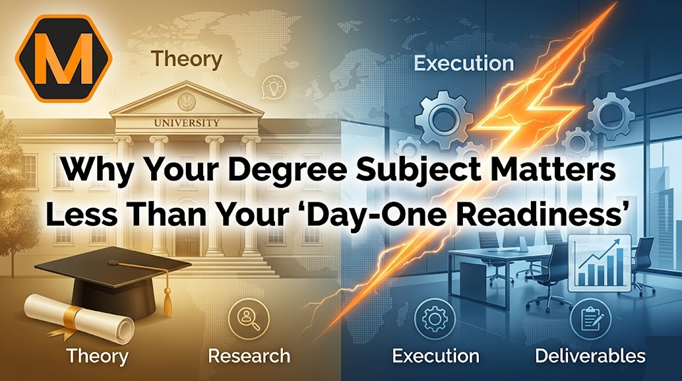
The traditional belief that your college major dictates your entire career path is fading fast. In the modern job market, employers are shifting their focus away from the specific title on your diploma and toward your day-one readiness. This concept refers to your ability to step into a professional environment and contribute immediately with a blend of technical proficiency and workplace integration. While a degree proves you can learn, your readiness proves you can execute.The transition from a lecture hall to a high-pressure office requires more than just theoretical knowledge; it demands a practical toolkit. Many students are now turning to online assignment help from myassignmenthelp to refine their research skills and ensure their academic projects meet professional structural standards. This shift toward seeking specialized guidance highlights a growing realization: the ability to produce high-quality, polished work is a skill that carries far more weight in the “real world” than the specific subject you studied.
The Shift Toward Skills-First Hiring
We are currently witnessing a massive transformation in global recruitment known as “skills-first hiring.” Major tech giants and creative firms have begun removing degree requirements entirely for certain roles. They have realized that a sociology major with a high level of emotional intelligence and data literacy can often outperform a business major who lacks adaptive learning capabilities.
What matters most in 2026 is your ability to handle a professional transition without a massive learning curve. Employers look for “career-ready skills” such as digital fluency, project management, and cross-functional collaboration. If you can demonstrate that you understand workplace integration, your specific major becomes secondary to your actual output.
Bridging the Gap Between Theory and Practice
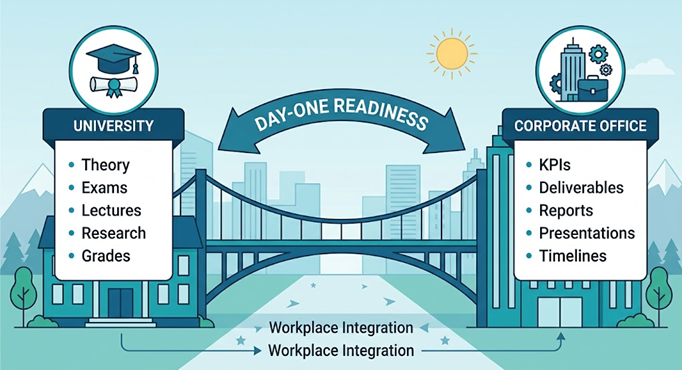
One of the biggest hurdles for recent graduates is the “application gap.” University often teaches you what to think, but professional life demands you know how to do. For example, a student might understand the complex theories of global markets, but struggling with a specialized report might lead them to seek Economics Assignment Help to see how professional data is synthesized.
Mastering these practical applications is what defines your day-one readiness. Below is a breakdown of how the professional world compares to the academic world:
| Feature | Academic Focus | Professional Focus (Day-One Readiness) |
| Primary Goal | Knowledge Acquisition | Value Creation & Output |
| Feedback Loop | Letter Grades | Key Performance Indicators (KPIs) |
| Collaboration | Individual Achievement | Cross-functional Teamwork |
| Deadlines | Flexible/Late Penalties | Hard Business Milestones |
| Problem Solving | Textbook Solutions | Adaptive & Creative Solutions |
The Power of Soft Skills and Adaptive Learning
While hard skills get you the interview, soft skills get you the job. In a world where AI can handle basic data entry, human-centric skills like critical thinking and collaborative communication are the new gold standard. These are the skills that allow you to navigate a difficult meeting or solve a problem that doesn’t have a textbook answer.
- Critical Thinking: The ability to look at a project and identify potential risks before they happen.
- Adaptive Learning: Being able to pick up new software or workflows in a matter of days, not months.
- Communication: Clearly explaining your ideas to teammates who may not have your technical background.
How Professional Guidance Enhances Readiness
Achieving day-one readiness often involves learning from those who are already in the field. This is why many students use academic support as a form of mentorship. By looking at how experts structure a dissertation planning document or a technical report, students learn the professional “standard” that isn’t always taught in a classroom.
Using these resources isn’t just about getting through a grade; it’s about meeting industry demand. You are learning how to present information in a way that is readable, authoritative, and structured—exactly what a manager will expect from you on your first Monday morning.
The 2026 Job Market Trends
The 2026 job market trends suggest that “learning how to learn” is the most valuable asset you can possess. As industries change rapidly, the specific facts you memorized for an exam may become obsolete. However, your technical proficiency in research and your ability to meet a deadline with high-quality work will always be in demand.
Employers today are looking for evidence of your professional transition capacity. They want to see that you have gone beyond your degree relevance to build a portfolio of work that proves you can handle the “heavy lifting” of a modern career.
Creating Your Own Readiness Roadmap
If you want to ensure you are ready for the workforce, you need to treat your final years of study as a professional “boot camp.” Focus on career-ready skills by taking on projects that require complex problem-solving. Use every assignment as an opportunity to practice workplace integration.
- Seek Feedback: Don’t just look at your grade; look at the editorial feedback on your writing.
- Master Tools: Go beyond Word and Excel; learn the project management tools used in your target industry.
- Refine Your Tone: Practice writing for a global tone that is professional yet accessible, much like the standards required for top-tier editorial content.
Conclusion: Your Diploma is Just the Start
Ultimately, your degree subject is a foundation, but your day-one readiness is the house you build on top of it. By focusing on skills-first hiring standards and ensuring you can deliver technical proficiency from the moment you are hired, you make yourself indispensable.
Whether you are navigating the complexities of a major project or seeking support to perfect your research through myassignmenthelp, remember that the goal is the same: becoming a professional who can deliver results on day one.
Frequently Asked Questions
Does my specific major determine my lifelong career path?
No, modern employers increasingly prioritize adaptability and practical skills over the specific title on your diploma. Many professionals successfully transition into fields entirely unrelated to their original area of study by demonstrating day-one readiness.
What exactly is “Day-One Readiness”?
It is the ability to enter a professional environment and contribute immediately without extensive hand-holding. This involves a combination of technical proficiency, effective communication, and an understanding of professional workflows.
How can I bridge the gap between academic theory and workplace reality?
You can close this gap by seeking expert feedback on your work, mastering industry-standard software, and practicing critical thinking in your assignments. Viewing your academic projects as professional deliverables helps build a “career-ready” mindset.
Why are soft skills becoming more important than technical knowledge?
As automation handles more routine tasks, human-centric abilities like problem-solving and collaborative communication have become the primary ways to add value. These skills allow you to navigate complex challenges that don’t have a standard textbook answer.
About The Author
Min Seow is a dedicated content strategist and academic researcher with a focus on higher education trends. Representing myassignmenthelp, Min specializes in translating complex academic theories into actionable insights for the modern student.