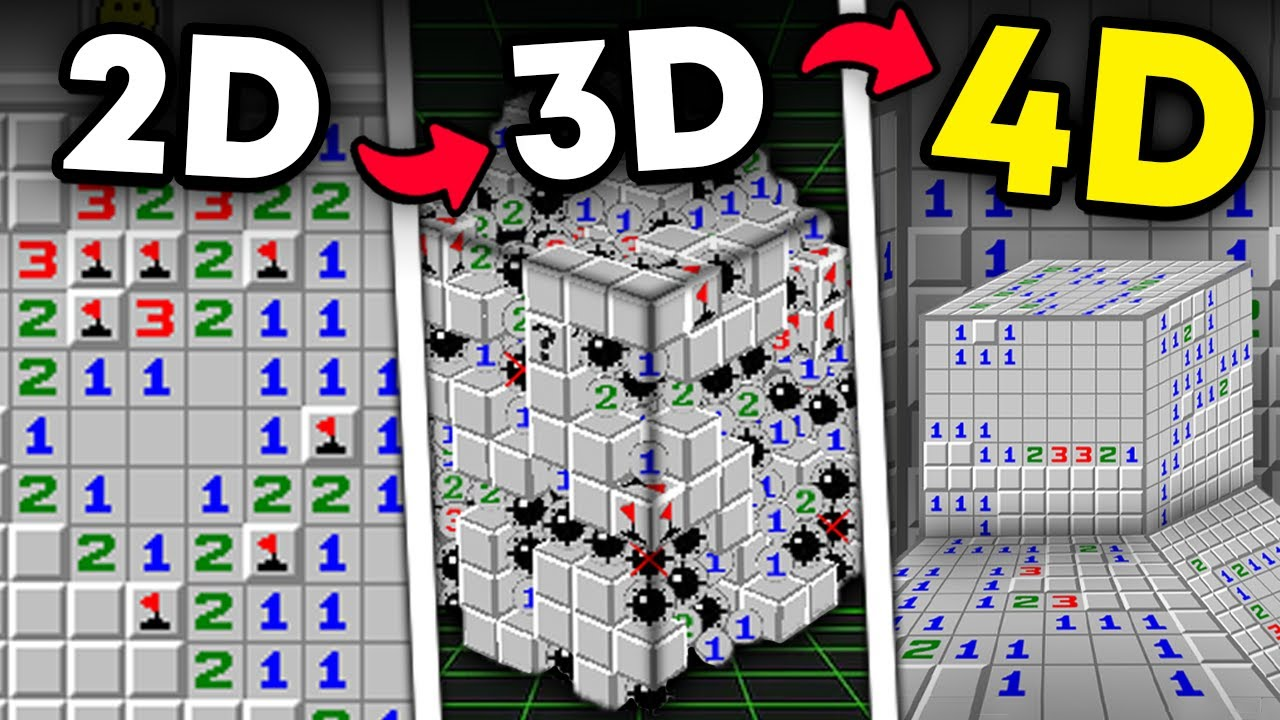
What Is 3D Minesweeper?
3D Minesweeper is a modern twist on the classic Minesweeper puzzle game. Instead of playing on one flat board, you explore a space with several layers. Mines can appear around you from different directions. This makes the game harder and more exciting. The basic goal remains simple. You must find safe spaces while avoiding hidden mines. Numbers give clues about nearby mines. However, the extra dimension changes how you read those clues.
The biggest challenge comes from thinking in three dimensions. A mine may sit above, below, beside, or near your current space. You must study the entire area before making a move. This requires patience and careful planning. Many players enjoy the game because every board feels like a small logic challenge. It can also improve observation and problem-solving skills while keeping the experience fun.
How Does 3D Minesweeper Work?
The basic rules of 3D Minesweeper are similar to traditional Minesweeper. You start with a board containing hidden cells. Some cells contain mines, while others are safe. Your task is to reveal safe cells and identify dangerous ones.
In a three-dimensional version, the board can contain multiple connected layers. Each revealed number provides information about nearby cells. Depending on the game design, nearby cells may include positions across different directions and layers. This creates more possible locations for hidden mines.
The game does not usually require fast reactions. Instead, it rewards logical thinking. You should look at every clue before choosing your next move. A single number can sometimes help you eliminate several possible mine locations. Learning to connect clues is one of the most important skills for becoming better at the game.
Detailed 3D Minesweeper Information Table
| Feature | Details |
|---|---|
| Game Type | Logic and puzzle game |
| Main Challenge | Finding hidden mines |
| Playing Style | Strategic and analytical |
| Board Design | Three-dimensional or multi-layered |
| Main Skill | Logical reasoning |
| Difficulty | Easy to very challenging |
| Important Clues | Numbers and revealed spaces |
| Main Goal | Clear safe areas without hitting mines |
| Best For | Puzzle fans and strategy players |
| Learning Curve | Simple rules with deeper gameplay |
| Key Strategy | Study clues before revealing cells |
| Common Theme | Hidden mines and safe spaces |
| Gameplay Pace | Usually calm and thoughtful |
| Useful Skills | Memory, logic, focus, and planning |
Why Is 3D Minesweeper More Difficult?
The extra dimension is the main reason 3D Minesweeper feels difficult. Traditional Minesweeper gives you a flat grid. Your eyes can quickly scan the board from left to right. A three-dimensional board requires more mental effort.
You may need to compare cells on different levels. A number on one layer can provide clues about spaces on another layer. This makes the board harder to understand at first. New players may reveal cells without considering the full area around them.
The good news is that the difficulty becomes easier with practice. Your brain slowly learns how the layers connect. You also become better at recognizing common patterns. Instead of guessing, you start making decisions based on evidence. That change is what makes the game satisfying. Every successful move feels like a small victory.
Understanding Numbers and Clues
Numbers are the most useful clues in Minesweeper. They tell you how many mines are located around a particular cell. In a three-dimensional game, the exact meaning of “around” depends on the version you are playing.
Some versions count nearby cells across several directions. Others use different rules for connected layers. You should always understand the game’s specific clue system before playing seriously.
Start with obvious situations. If a number shows one and only one unopened nearby cell exists, that cell is likely a mine. You can then mark it and study other clues. This creates a chain of logical decisions.
Do not focus on one number alone. Compare nearby numbers whenever possible. Several clues working together can reveal information that one clue cannot provide. This is one of the best ways to reduce unnecessary guesses.
Best Beginner Strategy
A good beginner strategy starts with patience. Do not click random cells simply because they look safe. First, examine the information already available on the board.
Look for numbers surrounded by mostly revealed cells. These areas often provide the clearest information. Mark possible mines when the evidence is strong. Then use those marked locations to understand nearby numbers.
Another useful habit is to think in groups. Instead of studying every cell separately, examine a small section of the board. Ask which cells can contain mines. Then remove possibilities that conflict with the numbers.
When playing 3D Minesweeper, remember that the board has depth. Always check nearby layers before deciding. A clue may have useful information outside your current view. This simple habit can prevent many mistakes.
How to Avoid Common Mistakes
Many new players make the same mistake. They become focused on one visible section and forget the rest of the board. This is especially dangerous in three-dimensional puzzle games.
Another mistake is assuming that every uncertain cell should be opened. Sometimes the best move is to wait. You may need another clue before making a safe decision.
Avoid marking cells too quickly. A wrong flag can affect your thinking later. Treat every mine marker as a logical conclusion rather than a guess.
You should also avoid rushing. Speed can be useful after you understand the game. During the learning stage, accuracy matters more. Take a moment to check your surroundings. A careful player often survives longer than a fast player.
Tips for Solving Difficult Boards
When a board becomes difficult, break it into smaller sections. Choose one area with several revealed numbers. Study its possible mine locations carefully.
Use confirmed information first. If a mine has already been identified, include it when reading nearby clues. This may allow you to solve another part of the board.
It can also help to compare similar patterns. Two numbers may share several unopened cells. Their difference can sometimes reveal which spaces are dangerous. This technique is useful in advanced Minesweeper.
With 3D Minesweeper, visual organization matters even more. Keep track of different layers in your mind. If the game provides separate views, use them often. Moving between layers can reveal relationships that are difficult to notice from one angle.
Can 3D Minesweeper Improve Your Thinking Skills?
Puzzle games can encourage several useful mental skills. Minesweeper requires players to examine information and make logical choices. It also rewards attention and careful observation.
A three-dimensional version adds another challenge. Players must understand relationships between different positions. This can encourage stronger spatial awareness.
The game can also teach patience. A player cannot always solve a difficult board immediately. Sometimes several clues must be connected before the answer becomes clear.
However, it is best to view these benefits as part of enjoyable gameplay. A puzzle should not feel like homework. The main purpose is entertainment. If you enjoy solving problems, the mental challenge becomes a natural part of the experience.
How to Get Better With Practice
Improvement comes from understanding mistakes. If you lose a board, think about what happened. Did you miss a clue? Did you make an unsupported guess? Did you forget another layer?
This review process can make future games easier. You begin recognizing patterns that once seemed confusing.
Playing easier boards first can also help. Learn the basic rules before moving to complex layouts. Once you feel comfortable, increase the difficulty slowly.
Regular practice is more useful than playing one very difficult board repeatedly. Short sessions can help you stay focused. Over time, your brain becomes more comfortable with the game’s spatial structure. Eventually, positions that once looked confusing may become much easier to understand.
Why Puzzle Fans Enjoy 3D Minesweeper
The appeal of 3D Minesweeper comes from its combination of simple rules and deep thinking. You do not need complicated controls to start. The real challenge comes from understanding the information on the board.
Every move can change your view of the puzzle. One safe discovery may provide several new clues. A carefully placed mine marker can also help unlock another section.
There is also a strong feeling of progress. Beginners may struggle with simple boards. After practice, they can handle much larger challenges. That improvement keeps the experience interesting.
Players who enjoy logic games may especially appreciate the three-dimensional format. It takes a familiar idea and adds a new layer of strategy.
Is 3D Minesweeper Good for Beginners?
Yes, but beginners should expect a short learning period. The basic concept is easy to understand. The difficult part is learning how the three-dimensional board behaves.
Start with a simple layout if possible. Spend time understanding how clues relate to nearby spaces. Do not worry about finishing quickly.
A beginner should focus on making logical decisions. Every mistake can teach you something about the board. As your confidence grows, you can move toward harder puzzles.
The most important lesson is simple: do not panic when the board looks complicated. Divide it into smaller sections. Study the clues one by one. This makes a large puzzle feel much more manageable.
Useful Semantic Keywords for 3D Minesweeper
Several related terms naturally fit this topic. These include 3D puzzle game, Minesweeper strategy, mine puzzle, logic game, hidden mines, puzzle solving, spatial reasoning, minefield game, number clues, safe cells, difficult puzzles, and strategy gaming.
Using these related concepts makes an article more useful for readers. They also help search engines understand the wider topic. However, related keywords should always fit naturally.
The goal is not to repeat every phrase many times. Good SEO writing should answer real questions. Readers should understand the game after reading the article. Clear explanations are more valuable than forced keyword placement.
Final Thoughts on 3D Minesweeper
3D Minesweeper gives the classic mine-finding concept a fresh challenge. Its multi-layer design requires more attention and spatial thinking. The rules remain simple, but the puzzles can become surprisingly deep.
The best way to improve is through steady practice. Study numbers carefully. Check connected layers. Avoid unsupported guesses. Most importantly, learn from every mistake.
Whether you already enjoy logic games or want something new, this puzzle is worth exploring. Start with a simple board and build your skills over time. Once you understand the clues, the three-dimensional format becomes much less intimidating.
The real fun comes when a difficult board suddenly makes sense. That moment of discovery is what keeps puzzle fans coming back for another challenge.
Frequently Asked Questions
1. What is 3D Minesweeper?
3D Minesweeper is a logic puzzle based on the classic Minesweeper concept. It uses depth or multiple layers instead of one flat grid. Players reveal safe cells and use numbers to identify hidden mines. The additional dimension makes the puzzle more challenging because clues can relate to positions on different levels.
2. Is 3D Minesweeper harder than normal Minesweeper?
For most beginners, it can feel harder. The basic rules are familiar, but the board has extra depth. Players must understand more nearby positions and track multiple layers. After regular practice, the three-dimensional layout becomes easier to read and solve.
3. What skills help with 3D Minesweeper?
Logical reasoning, attention, patience, and spatial awareness can all help. You also need to compare clues and remember previously discovered information. Fast clicking is not the most important skill. Careful thinking usually produces better results.
4. Can children play 3D Minesweeper?
Older children who enjoy logic puzzles may find it entertaining. However, the difficulty depends on the particular game. A simple board can be a good starting point. Parents can introduce the basic rules first and let children increase the challenge gradually.
5. How can I become better at 3D Minesweeper?
Start with easy boards and study every clue. Avoid guessing whenever logical information is available. Learn how different layers connect. When you make a mistake, review the clues that you missed. Regular practice will help you recognize patterns faster.
6. What makes 3D Minesweeper interesting?
Its biggest attraction is the extra dimension. Traditional Minesweeper uses a flat playing area. The 3D format adds depth and creates new relationships between cells. This makes familiar gameplay feel fresh while keeping the main focus on logic and careful decision-making.